A National narrative: What’s that to do with faith?

Comments are open! Leave a comment on a specific issue by clicking/tapping the the comment icon in the red boxes or by using the form at the bottom of the page.

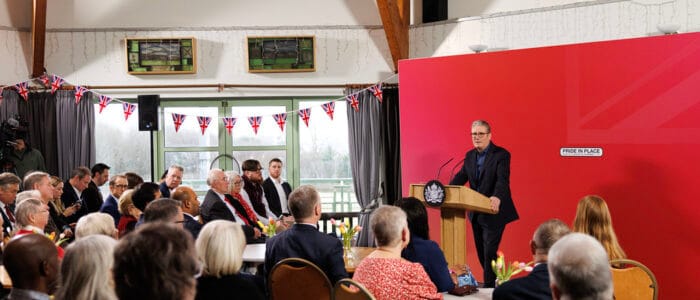
In media coverage of his address last Thursday, much of Keir Starmer’s message on social cohesion has been overshadowed by his comments on the Mandelson case. Integration—what that looks like and how it should be achieved—remains a key issue for this government, as our recent APPG on Faith and Society event on the Good Faith Partnership and Hope Not Hate report began to explore.

In his speech, Keir Starmer stated that “we need to be more vigilant in asserting British values. Call out those who want to divide us—whoever they are.” Whilst this remains true, I also believe there is a need for a national conversation about British values and what they actually are. The existing values are pretty vanilla—they could instead be termed northern European values—but they are worthy and important foundations of a just society: democracy, the rule of law, individuality, mutual respect and tolerance of those with different faiths and beliefs.

However, whilst integral to our society, they do not invite understanding of some of the quirks of culture that can fracture and divide when misunderstood in the everyday. Faith groups can play a key role in creating the safe spaces to define and explore that identity in practise.

What do think British values are? What should they be?
1
Share your thoughts on this!x

It is important to recognise that the major influences on UK culture—both good and bad—are no longer just from individuals and face-to-face interactions. The very real influence of the internet often means that cultural norms are under pressure in ways that we’re not even aware of.

There is a difference in the United States concept of “freedom of speech” compared with the more British “freedom of expression”. The American notion is affected by Jeffersonian atheism and strong French influences whilst we are guided by self-regulation more akin to the Christian New Testament guidance to not use our own freedom to cause another to stumble.

We may call these both “freedom of speech” at times, but the concept imported from the US is more to do with the rights of an individual over the considerations of wider society, rather than the British celebration of freedom and restraint.

Indeed, many of our historic institutions and processes within government find their roots in Christian institution. Yet, this does not impose a faith on others—it makes space for expression within broad parameters.

Social cohesion is a two-way street. It concerns both those who have grown up in the UK and are part of the “majority culture”, as well as those more recently arrived. It is about listening, learning and adapting.  We found that within our Café Connect programme, which supported Hong Kongers to adapt to life in the UK, there was a lot of laughter and experiences shared. One example centred around the funny foods of the UK—there was something strange about the idea of the Yorkshire savoury “pudding”, and sweet mince pie, not to mention the Dorset knob. At the same time, members of the “host community” also enjoyed their first taste of moon cake and dim sum.

What cultural challenges do you experience in your work?
0
Share your thoughts on this!x

Food continues to be one of the most visible ways migration has added rich culture to the United Kingdom—potatoes arriving from the Americas, fish and chips arriving with Eastern European Jews, and, of course, our most popular takeaway curry arriving from the Indian subcontinent.

But there are countless other ways our culture has been shaped positively by migration from the NHS, where migrant doctors and nurses have long been indispensable to patient care, to science and technology, where migrants have been responsible for innovation, including the iconic British car the Mini, invented by Alec Issigonis, who came from Greece. Migrant entrepreneurs are responsible for starting around 27% of new businesses in the UK, with big brands like Pataak’s and Marks and Spencer’s started by refugees.

They have made substantial contributions to art and sport, such as Mo Farah from Somalia, who is one of Britain’s greatest Olympians, and Indian Anish Kapoor, who designed Britain’s largest piece of public art, the Orbit sculpture in the Queen Elizabeth’s Park. In every field, migrants have not only filled vital roles but have also introduced new ideas, skills, and perspectives, making the UK a more dynamic, prosperous, and culturally rich society.

To build social cohesion, we need an explicit conversation about our cultural values. In one example, traditional British communication often values indirectness, understatement, and politeness, so being very direct or expressive can be mistaken for bluntness or rudeness, while silence or reserved behaviour may be misread by others as cold or unfriendly. Understanding one another’s cultural norms and preferences is a key element of facilitating belonging in society.

How do we create a culture that values existing expressions while welcoming and blending in others?
0
Share your thoughts on this!x

I think we could have quite an enjoyable exploration of how we express ourselves and what our cultural values are. Some starting points that I would like to examine which could become part of British values include: Why is it that Brits love the underdog? Why do we feel uncomfortable when we’re winning? Why do we love to queue and get irritated when people bypass that queue? Why is it that we are as a nation more involved with overseas causes and give disproportionately in response to charity appeals compared with other nations? Why is it that we are devoted to a National Health Service but communism never took hold in the UK?

As the Prime Minister starts to define contribution as key to integration, we need a clearer sense of what British values are and how they intersect with culture. The point is we need to be able to have a conversation about these things. I invite you to come with your reflections because it is in these questions or observations that we start to articulate who we are. It is these things that we need to hold onto as we celebrate our culture, welcome those newly arriving, and build a future together.

What would you say to Keir Starmer? What does community, British values and integration mean to you?
0
Share your thoughts on this!x

Below, you’ll see we’ve opened up an opportunity for you to share your thoughts. We are keen to gather some faith-based responses on this whole idea of national narrative, which we will seek to input where we have opportunity. Our focus is on faith-based responses, but we will not restrict people to that area.

To read more of Daniel’s thoughts on integration and cohesion, why not take a look at his reflections from last year after attending a conference in Singapore?

About Daniel Singleton

National Executive Director

Daniel Singleton has been the National Executive Director of FaithAction since 2007. This role has seen Daniel forge close working relationships across a number of national government departments, as well as local statutory and voluntary-sector bodies. As part of FaithAction’s mission to connect national and local government with grassroots organisations, Daniel also meets regularly with FaithAction member groups to help them develop in their social action.

guest
1 Comment
Most Voted
Newest Oldest