
Questions of Hope and Hate – Faith and Faultlines in a Changing Britain
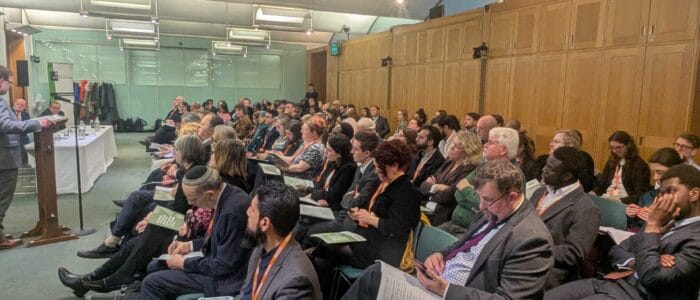
On Monday 12th January 2026, over 100 people including 13 parliamentarians gathered at Portcullis House for the launch of Questions of Hope and Hate: Faith and Faultlines in a Changing Britain, a new report produced by Hope Not Hate in partnership with the Good Faith Partnership.
The event, sponsored by Anna Dixon MP on behalf of the APPG on Faith and Society brought together parliamentarians, faith leaders, civil society organisations, and academics to explore how faith and politics are interacting in a rapidly changing social and political landscape.
Speakers included:
- Anna Dixon MP, Labour MP for Shipley and Officer for APPG on Faith & Society
- Lord Russell Rook OBE, Partner at Good Faith Partnership and Peer in the House of Lords
- Paul Bickley, Author of the report
- Nick Lowles, CEO of Hope not Hate
- Rabbi David Mason, Executive Director of HIAS+JCORE
- Chine McDonald, Director of Theos
- Lord Krish Raval OBE, Director of Faith in Leadership and Peer in the House of Lords
- Aliya Azam MBE, Interfaith Coordinator at the Al Khoei Foundation
- Zöe Franklin MP, Liberal Democrat MP for Guildford and Chair of APPG on Faith and Society
The report, based on research with senior faith leaders conducted in late 2025, was described as a “temperature check” on the current moment. It highlights declining trust in politics and institutions, growing feelings of marginalisation among different communities, and rising concerns around hate crime, antisemitism, Islamophobia, and the misuse of religious symbolism by extremist movements.
Recommendations from the report are to:
- Establish consistent and strategic engagement
- Develop new approaches to establish religious literacy
- Renew national narratives of belonging
- Strengthen faith leadership and institutions
- Support interfaith structure and local action
A Q&A session followed, with discussion on the risks of co-option versus cooperation between faith groups and government, the role of the media in shaping narratives about faith, and the need for deeper academic research alongside real-time engagement with communities.
This was followed by a panel discussion involving voices from different faith and civil society backgrounds, which explored themes such as religious literacy, politicisation, multiculturalism under pressure, and the vital but often unrecognised role women play in sustaining community cohesion at grassroots level. The discussion reinforced the message that faith remains an under-utilised resource in public life, with significant potential to contribute positively to social wellbeing if better understood and supported.
The event concluded with reflections on the critical moment Britain faces. Attendees were encouraged to continue engaging in dialogue, sharing best practice locally, and strengthening collaboration across faiths, sectors, and institutions, through initiatives such as the Faith Covenant.
You can read the full report here.