A Covenant between the UK Government and Civil Society
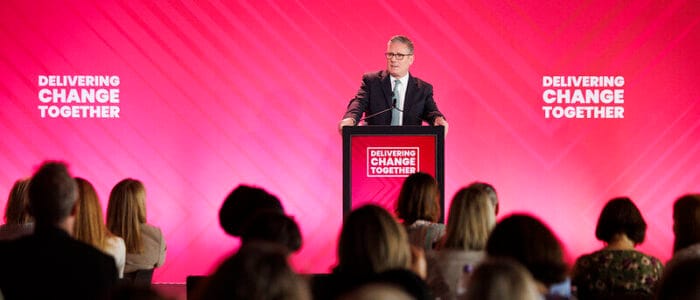
I must admit I still get excited by Christmas Eve. My family gathers, there are presents being put by the tree, there is the whiff of food being prepared – but I recognise it’s the anticipation of the day that is the best part of the season for me. In the same way, my anticipation is currently rising due to the launch of the Civil Society Covenant which took place in London last week as part of the Government’s Civil Society Summit event.
Some months back, I was invited to be part of the Civil Society Advisory Group, who were working behind closed doors on the text and advising the government on their drafting of this document. While it was a great privilege to be part of such a group, it came with the caveat that we could not share its workings more widely.
There are plenty of fine promises – and some soaring rhetoric – but, of course, ‘the proof is in the pudding’. Will we be faced with a Christmas Day-like anti-climax? Fortunately, there are a few things that suggest not!
1) There is a large-scale buy-in from ministers and cabinet members – I personally lost count at eight ministers and five secretaries of state who addressed the summit, many who also stayed for questions.
2) We are at the start of the term of a government with a large majority – this work matches promises made before the election. In other words, this is not a desperate attempt to curry favour in the dying days of an administration.
3) Yet, there are still plenty of unanswered questions – how will this play out with existing agreements, such as the Faith Covenant? Will it have teeth? But these questions were voiced, and we have time to work these things out.
However, despite the strong start, there are issues which could be arising – I will explore these through the following statement from the speeches or the text itself.
“Rich tapestry of charities…” – Although this is very true and there is great variety in civil society, that does not and should not mean that we speak with one voice. There must be room for both disagreements between organisations and government and between organisations themselves.
“Charities should not replace government.” – This has often been stated by various governments and ministers over the years. At best, they recognise there is some overlap. But there is a fundamental problem – are these roles to be mutually exclusive? Who is supposed to do what?
“Local partnerships” – This was a new announcement which even those of us in the advisory group had not heard beforehand. So, does this mean there will be resources for existing work that is in line with the spirit of the Civil Society Covenant? And could this mean that there is also funding for things like Faith Covenants?
“Building trust and overcoming challenges” – A relationship that is a mature and strong is one where there can be challenges between the parties and yet the relationship continues to function without a loss of trust. Unfortunately, we’ve been faced with both government and civil society that does not have that longevity of relationship with each other. Will there be a change now?
A unique opportunity for faith and Faith Covenants?
You will be unsurprised to hear that, at every opportunity I could find, I shared the learning that we have developed over many years of FaithAction—particularly in relationship to partnership working and the Faith Covenant. It was good to hear from those speaking and to see in the text that the Civil Society Covenant is not there to lower standards but to heighten them – it should not supersede existing agreements and arrangements in local areas. Thus, both in writing and in spirit, the Civil Society Covenant should work well within a context of Faith Covenants. But it will be important for local Faith Covenant areas to look at how their work can dovetail with that of the Civil Society Covenant. In this way, Faith Covenant areas have a responsibility to be a pathfinder for the expression of Civil Society Covenants locally.
The ask!
We are really keen to hear about and support your work in this area – please get in touch with the team and let us know about both the good and negative repercussions of the Civil Society Covenant. As always, we’ll endeavour to do our best to represent the views of faith organisations and faith communities in this vital new area – but we can’t do that effectively unless we hear from you!
Don’t forget – Faith in Partnership Week is coming again in September! Be sure to take the opportunity to learn more about the week, check out the resources on offer, and let us know what you’re planning so we can help amplify your work!