We Were Wrong!
I want to start this blog by recognising that we were wrong! And it’s important that we must also apologise for being wrong.
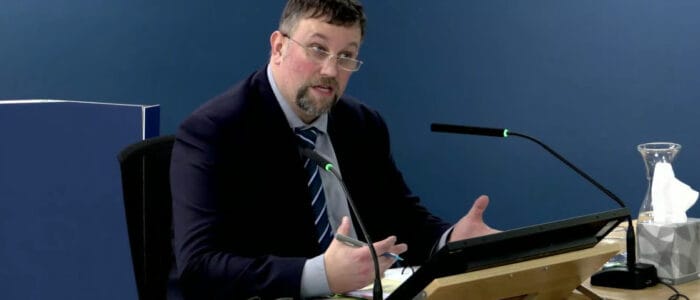
Alas, I’m sorry to disappoint—this is not actually an apology. This has all been prompted by my recent appearance before the COVID inquiry to present evidence in late February 2026.
So, what do we get wrong?
Since the lockdowns brought on by COVID, there’s been the impression that the very nature of the relationship between faith communities and the public sector has changed for the better.
As I prepared my evidence—aided significantly by the FaithAction team, I must add—for Baroness Hallett’s inquiry, it led me to reflect on the activities held and connections formed during the pandemic. Like many nations, we found ourselves unprepared for the breadth and depth of this crisis.
This was certainly evident in the early days when you observed how government had interacted with faith. It took far too long for government to recognise that faith is a vital asset and not just an identity and a place for people to gather. Even when there was a greater appreciation of how faith communities could support our wider society during the crisis, we saw that government was still uneven in its appreciation of faith assets. Some Whitehall departments and some local authorities chose to work more closely with faith and were able to deliver assistance where it was most needed, whilst others didn’t know quite what to do, or even, at times, excluded them entirely from the conversation.
In 2020, the APPG on Faith and Society commissioned the Keeping the Faith report, research with Goldsmiths University on the relationship between local authorities and faith organisations during lockdown. We were pleased to see that findings showed a widely held positive view of faith contributions to wider society. This moment could have formed the foundation of a more integrated approach to building back better, that tightly combined the faith, civil society, and the public sector as we emerged from COVID. Unfortunately, it was not to be.
In the 2022 follow-up report Keeping the Faith 2.0, we again worked with Goldsmiths to reflect on what could happen as result of this positive interaction. The message was quite simple: faith has responded positively to crisis, so it’s important that we don’t regress back to the way things were before. We should build on these partnerships born out of pressure and necessity for the betterment of our whole society going forward.
Or, if you prefer it in the form of a pithy tagline…
Faith isn’t just for crisis
We appear to be in an era of sustained crisis. Lockdown had scarcely finished when we were beset by more, one after the other: Afghans were displaced from their homes, a war began in Ukraine, the rising cost of living drove families to the edge, and fuel prices soared.
Part of the reason—yet by not means the whole reason—that the crisis relationship with faith was not built upon, was the reality of staff deployment. As individuals moved roles after emergency placement during COVID, relationships and networks were broken—but there has not been a curating of those connections, no continuation of relationship. This is why ideas such as the Faith Covenant are so important for formalising the links between local governments and faith organisations—it gives us a mechanism to come together regardless.
Value had not been found in what faith provided, let alone an imagination of how these new relationships could be used to bear the weight of other issues. The previous government often spoke of ‘levelling up’, yet the opportunity was missed to connect with faith groups, to position them as anchors of positive connection, innovation, and togetherness in their communities.
But government is not solely to blame—faith groups, too, must shoulder some of it. The very nature of lockdown meant we found ourselves in unusual situations—we became aware of our communities (or lack of), and we sought to help one another: to visit, to shop, to talk, in deliberate ways. Faith leaders had to perform services quite differently in a world where we couldn’t be in the same room as each other. This led to much innovation—necessity, after all, is the mother of all invention. But were we perhaps too eager to return to old routines once the crisis lifted?
I’ve been in far too many settings where I’ve heard earnest messaging from officials and ministers that talk of the value of civil society and the vital nature of faith communities, of the challenges of community cohesion, and yet the scarcity of resources that are available.
In the end, the value of anything is determined by what someone is willing to pay for it—the irony being that, within the faith and voluntary sector, we have a greater scope of value beyond pounds and pence. At times, government tries to highlight how they value things beyond plain spending. Yet, for the last 20 years, governments of all hues parade out how much they’re spending on each new problem, as if the amount of money thrown at a problem equals a solution.
The key issue is they keep talking of the value of the VCFSE sector whilst not being willing to direct any of this spending in its direction.
Finally, let me return to some well-worn taglines. We had assumed that these were self-evident and no-longer need to be proclaimed, and yet…
Faith is too significant to ignore
Faith reaches the parts nothing else came
Faith is the first in and the last out
Throughout the pandemic, faith demonstrated each of these in practical terms. Faith is and always has been a significant voice and gathering point for large parts of UK society. Faith connects with those that the public sector often finds the most difficult to reach. And faith is swift to respond and the last to lose interest.
My evidence to the inquiry was about the impact of COVID upon faith—but, in many ways, I wanted to talk about the COVID period in terms of the positive impact that faith had on the rest of society. My lasting frustration is that we have not seemed to learn any lessons from it. If we are not using faith to build back better, are we truly prepared for what is still to come?