Why partner with faith groups?
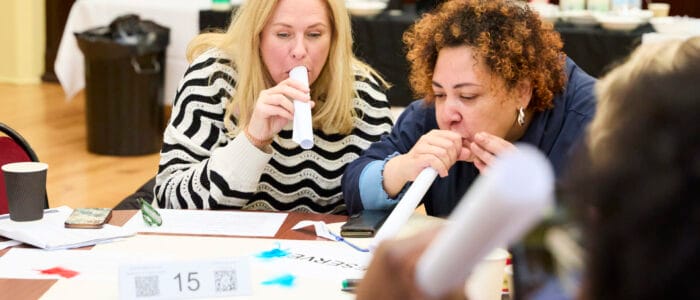
Faith groups working in partnership play a unique role in helping people access the support they need. But why? Participants and volunteers at some of the organisations running Creative English give some powerful examples from their experiences:

Trusted spaces, trusted people

Accessing support in a place you already go is not only convenient, it enables people to feel secure, knowing their faith and culture will be fully respected. As participants at East London Mosque explained:

I found coming here to pray regularly helped my mental health first and then it wasn’t such a big step to join this group. I feel this class has really helped me, talking to other women.

I know I’m safe here. People understand me. I wouldn’t have wanted to go to a college when I started, but I do now. It’s built my confidence.

As research has found, faith capital is also transferable and that people will often have more trust in another faith group, with shared values, rather than a secular institution.  

Committed volunteers

Volunteers at faith centres are special. Generally, their motivation comes from wanting to make a difference in their community as an expression of their faith, which can mean that they volunteer for an extraordinarily long time. In Creative English, some of our volunteers have been serving our learners for over 11 years with the same passion and care that they started with. That’s not to say that it’s not equally amazing that other volunteers build skills, confidence, and work experience and then move on to be paid employees elsewhere, but it does show an level of incredible commitment I’ve not encountered in other settings. It means there is often a high level of expertise amongst experienced volunteers and a legacy even when funding ends.

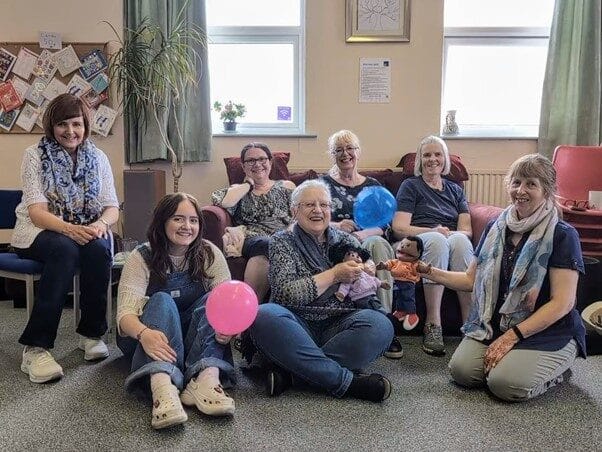
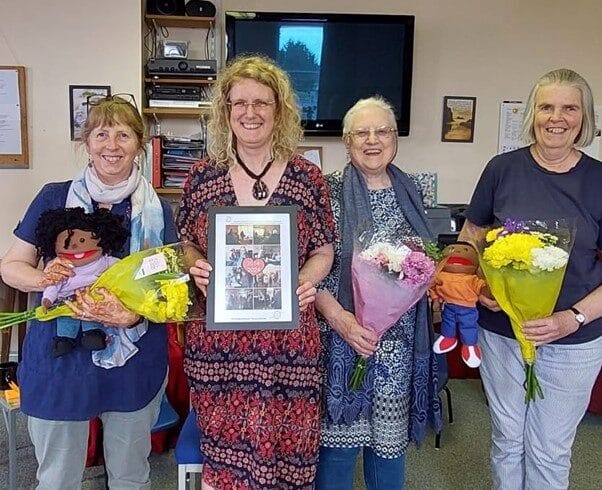
Volunteers from Oasis Luton in 2024 celebrating 10 years running Creative English

Going above and beyond

Staff and volunteers in faith settings have a culture of going above and beyond to support people in addressing complex layers of barriers. In one example, on a recent visit to Saathi House, an older lady facing significant learning challenges had made progress supported not only by the sessions but the facilitator faithfully phoning her daughter every week to explain what had been covered in the class, so her daughter could go through it with her. In another, a participant at Community Resources explained how things had changed for her whole family:

I came for the English, but it changed my life so much more than that. They (programme volunteers) found out I had a disabled child and helped me get the right support. I was stuck in a dark place and they helped me into the light. My child is doing so much better now.

Long term, holistic support

The long-term nature of faith groups means there is opportunity for long-term coaching to support people’s growth, both in a consistent and ad hoc way, as required:`

I started here learning English. Then I volunteered. Now I run the kitchen as a member of staff and train others. It’s good to see them growing in confidence and skills like I did.

I don’t come all the time – my English is good now. But when things go wrong in my life I know this is somewhere I can come back to.

Case Study: Oasis Hub, Luton

Oasis Luton have run the original Creative English programme, the Creative English for Parent and Child programme, the Creative English Online programme over lockdown, and Creative English for Health across the 10 years. 

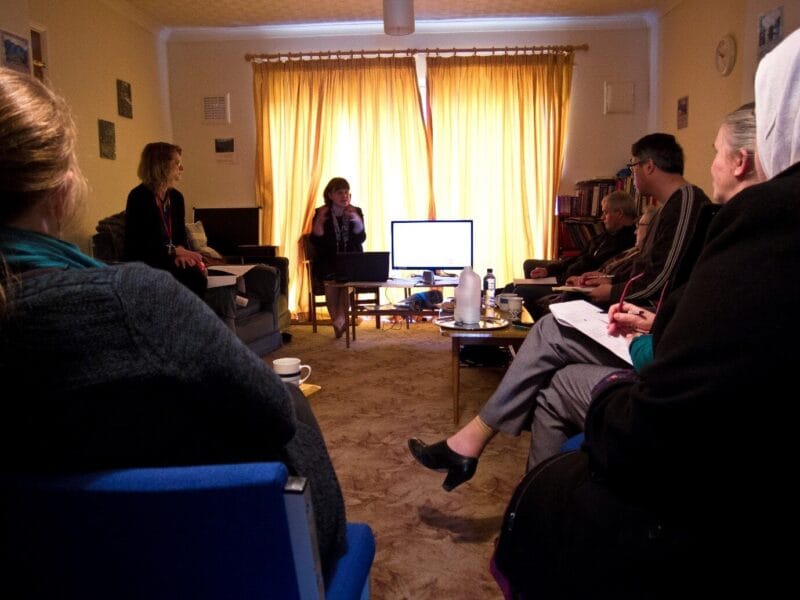
The Luton team at the first Creative English training for hub partners, as part of the national roll-out, in March 2014

At Wednesday’s graduation, it was wonderful to be part of a circle of 40 people including the British-born team and learners who had been in the UK between 2 months and 44 years, playing language games and laughing. As one participant said: “It’s not a class, it’s a family!” The most common piece for feedback from learners being the difference that making friends had made to them:

I was lonely. It’s hard when you don’t know anyone, but thanks to this group, I have friends. It makes everything better!”

This is in addition to the difference participants report in being able to talk about symptoms and treatments, thus being empowered to look after themselves and their families better. For example:

Before I couldn’t explain in doctors and pharmacy. Now I can.

My son was sick. Before – I [was] scared, but now its ok. I tell problem, get medicine. Son now happy-happy.

The graduation celebrated the achievements of those who had attended both long and short Creative English for Health programmes.

Like many other faith groups, support doesn’t stop because it’s the end of term. Oasis Luton runs trips which give learners the opportunity to practise using public transport, with team challenges to buy specific items within a budget and, this summer, an opportunity for parents to take their children to see the sea for the first time. There is huge excitement as everyone looks forward to a day out together!

We thank the incredible Luton team and all our amazing volunteers across the country for their hard work, love, and care that has made such a difference.

The current team 2024 at Creative English for Health training
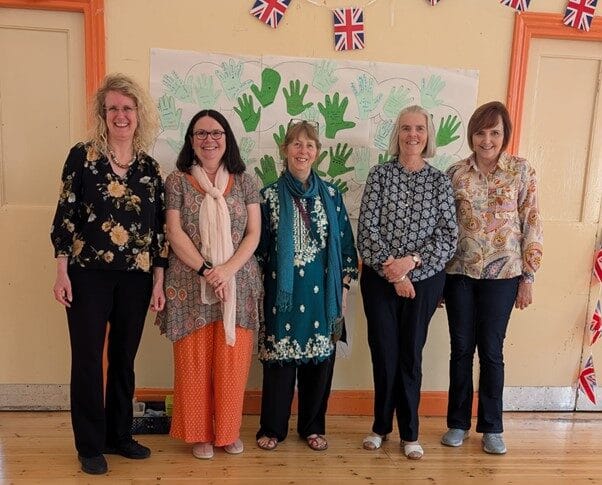
The team at the graduation 2024 in front of a tree of hands where learners had shared all the different things they had got out of the programme

About Dr Anne Smith

Creative English Lead Trainer

Dr Anne Smith is the Lead Trainer and Founder of the Creative English programme. In this role, she writes session plans and materials, trains facilitators and supports those delivering Creative English. She is responsible for developments of the Creative English programme, including variations to support Health Professionals and Creative English: Family Learning.